Quick picks
Three pieces that earn drawer space
Measure first. These simple organizers solve zoning and cleanup without locking the drawer into one brewer or accessory set.
Flexible boundaries
SpaceAid Bamboo Drawer Dividers
Best for: Changing routines, wide drawers, simple zoning
Check on Amazon (paid link)Lift-out cleanup
madesmart Classic 4-Compartment Organizer
Best for: Scoops, brushes, bag clips, small parts
Check on Amazon (paid link)Maintenance kit
OXO Good Grips Sinkware Caddy
Best for: Coffee-bar cleanup, shared kitchens, deep drawers
Check on Amazon (paid link)| Pick | Role | Best for |
|---|---|---|
| SpaceAid Bamboo Drawer Dividers | Flexible boundaries | Changing routines, wide drawers, simple zoning |
| madesmart Classic 4-Compartment Organizer | Lift-out cleanup | Scoops, brushes, bag clips, small parts |
| OXO Good Grips Sinkware Caddy | Maintenance kit | Coffee-bar cleanup, shared kitchens, deep drawers |
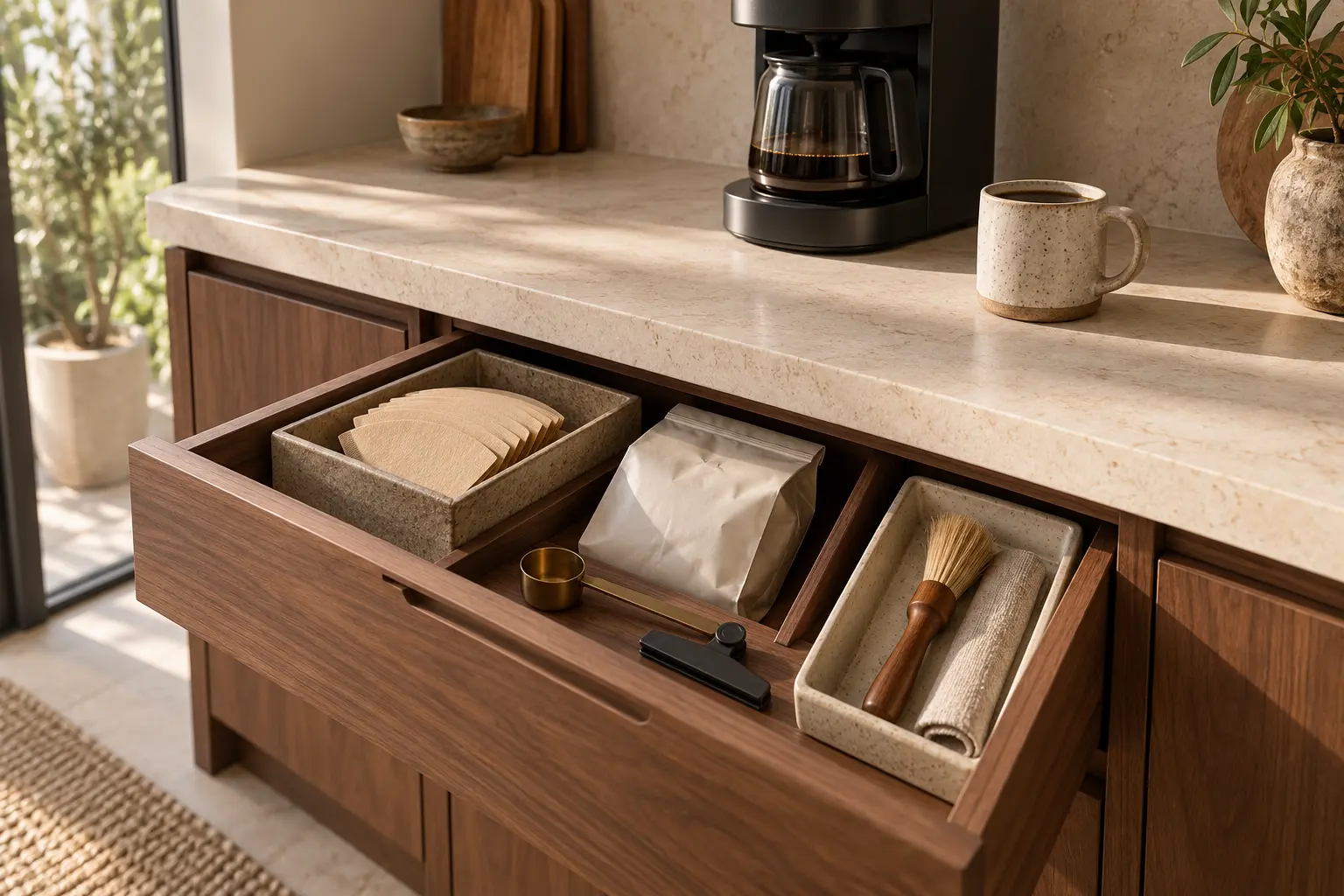
The most useful coffee drawer is not a miniature shop. It is a landing place for the pieces that appear every morning and look untidy by noon: filter papers, a scoop, bag clips, a cleaning brush and the half-used packet of descaling tablets that should never have lived beside the mugs.
Start with what your hands actually reach for. Empty the drawer, make coffee for three mornings and leave each retrieved item on the counter. That small pile is your daily zone. Backup filters, unopened coffee and occasional maintenance tools can sit farther back—or somewhere else entirely.
Organize the drawer in three passes
Build a front-row routine
Put the scoop, current filters and one bag clip where the drawer opens. If you must lift a bin or move spare stock before brewing, the layout is fighting the routine.
Contain dust and drips
Give brushes, cloths and small cleaning parts a washable tray that lifts out in one piece. Loose grounds travel; a tray turns a full drawer cleanout into a quick rinse.
Separate daily from backup
Keep one open coffee bag and a short filter stack close. Store unopened bags, bulk pods and duplicate tools deeper in the drawer only if they fit without hiding the everyday pieces.
Measure the drawer you have, not the organizer online
Measure inside width, depth and usable height, including any screw heads or rails. Then check how much clearance remains when the drawer closes. Tall dividers that look perfect in a product photo can catch a bag seal or prevent the drawer above from moving freely.
Use two or three broad zones instead of a grid of tiny cells. Coffee tools change as routines change, and a narrow compartment designed for one scoop becomes wasted space when the scoop is replaced. Adjustable dividers and low trays are less photogenic than a custom insert, but they are easier to live with.
Let packaging do some of the work
Filters stay cleaner in their box or a simple lidded holder than standing loose in an open row. Beans can remain in a well-sealed original bag inside the drawer, protected from the bright counter. Decant only when a container improves the seal or makes the bag easier to use—not because every ingredient needs a matching jar.
If several people use the station, label the zones by job rather than by object: brew, clean and backup. That language survives a change of brewer and makes it obvious where an unfamiliar tool belongs after the counter is wiped.
Give the cleaning kit an exit
A small handled caddy is useful when the sink is not beside the coffee station. Keep the brush, approved cleaner and one spare cloth together, lift the caddy out for maintenance, then return it only when everything is dry.
Do not store a damp cloth in a closed drawer or let cleaning products share a loose compartment with filters. The drawer should help the station reset; it should not become the place where moisture and coffee dust wait for the next morning.
Useful organizers, not a matching set
These are starting points, not a requirement to replace gear you already own. Check the current listing, dimensions, compatibility and seller details before purchasing.
Flexible boundaries
SpaceAid Bamboo Drawer Dividers
Four adjustable dividers create useful zones without committing the whole drawer to fixed compartments. Measure the drawer’s usable height and width before ordering.
Best for: Changing routines, wide drawers, simple zoning
Lift-out cleanup
madesmart Classic 4-Compartment Organizer
A shallow four-section tray groups scoops, brushes and bag clips so one messy category can be lifted out without emptying the entire drawer.
Best for: Scoops, brushes, bag clips, small parts
Maintenance kit
OXO Good Grips Sinkware Caddy
A compact divided caddy with ventilation and a removable drip tray keeps a brush and cloth together near the cleanup zone.
Best for: Coffee-bar cleanup, shared kitchens, deep drawers
Keep the inside calm
A drawer that can change with the routine
- Repeat the drawer material once—wood dividers in a wood-toned kitchen are enough.
- Keep labels small and functional; the drawer does not need a decorative theme.
- Leave one compartment partly empty so a new tool does not start a second clutter pile.
Protect the clear counter
Why coffee drawers become junk drawers
- Buying organizers before measuring internal height.
- Filling the front row with backup stock instead of daily tools.
- Closing damp cloths or loose cleaning products beside filters.
Good questions
What people usually ask
What should go in a coffee drawer?
Start with small items used almost every day: filters, scoop, bag clip, brush and a dry cloth. Keep liquids, damp textiles and bulky backup stock elsewhere unless the drawer is specifically designed for them.
Should coffee beans stay in the drawer?
A cool, dry drawer can protect a well-sealed opaque bag from light. Keep it away from a warm appliance cavity and do not crowd the bag so tightly that its closure opens.
How do I stop coffee grounds collecting in the drawer?
Contain the grinder-to-brewer movement on the counter, then keep dusty tools in a shallow washable tray. Lift and rinse that tray during the weekly reset instead of waiting for a full drawer cleanout.
Save this list
Your one-drawer reset
- Measure the usable drawer
- Track three mornings of use
- Create daily, clean and backup zones
- Add one lift-out tray
- Remove duplicates and damp items
Explore the idea