Quick picks
Tools for routing, not for adding capacity
These pieces can organize slack and separate the wet zone. They cannot repair damage or turn temporary wiring into a permanent solution.
Unplugged storage
VELCRO Brand ONE-WRAP Cable Ties
Best for: Store-away brewers, detachable cords, spare slack
Check on Amazon (paid link)Short visible route
Command Clear Round Cord Clips
Best for: Backsplash routes, renter-aware organization
Check on Amazon (paid link)Dry working boundary
24 × 16-inch Silicone Coffee Mat
Best for: Drip control, clear station boundary, fast cleanup
Check on Amazon (paid link)| Pick | Role | Best for |
|---|---|---|
| VELCRO Brand ONE-WRAP Cable Ties | Unplugged storage | Store-away brewers, detachable cords, spare slack |
| Command Clear Round Cord Clips | Short visible route | Backsplash routes, renter-aware organization |
| 24 × 16-inch Silicone Coffee Mat | Dry working boundary | Drip control, clear station boundary, fast cleanup |
Coffee corners collect high-draw appliances, water and tight clearances in one small area. That makes cable management a safety decision before it becomes a styling decision. The cleanest-looking solution is not useful if it traps heat, pinches insulation or hides a connection you should be able to inspect.
Begin with the appliance in its normal working position. The original cord should reach its outlet without tension and without crossing the sink, hob or a path where a hand carries a full kettle. If the only way to make the station work is permanent extension wiring, change the location or ask a qualified electrician about a suitable outlet.
Map the cable route in three steps
Place the highest-draw appliance first
Set the espresso machine, brewer or kettle where its own cord reaches a fixed outlet. Follow the appliance manual for electrical, ventilation and placement requirements.
Choose a dry route you can inspect
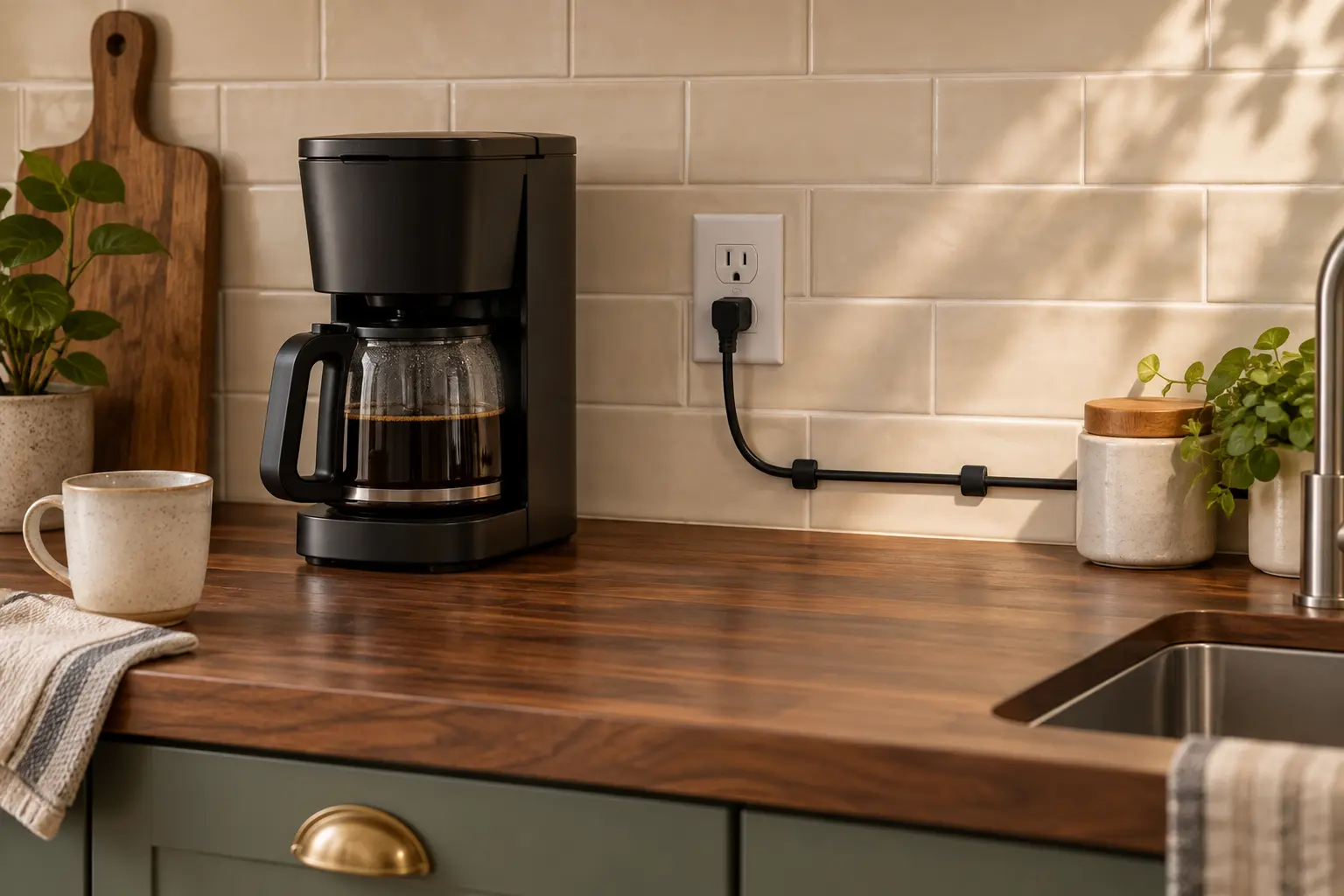
Keep the cord away from hot surfaces, sharp edges and standing water. A short visible run behind the appliance is better than a connection sealed inside a decorative box.
Manage slack, not capacity
A reusable tie can gather a small amount of unplugged storage slack. It does not make an overloaded outlet, power strip or extension lead safe. Never coil a cord tightly while an appliance is operating.
Why the outlet decides the layout
A tray can move; a wall receptacle usually cannot. Map power before buying shelves or centering a machine beneath artwork. The cord should not be stretched behind the appliance, pressed against a hot body or bent sharply at the plug.
Electrical Safety Foundation International treats extension cords as temporary rather than permanent wiring and warns against overloading, daisy-chaining and routes through walls, doorways, ceilings or floors. For a permanent coffee station, a fixed outlet in the right place is the calmer and safer design.
What cable clips can—and cannot—do
A low-profile clip can guide the appliance's own cord along a dry backsplash where the manufacturer allows it. Choose a clip sized for the cable, avoid crushing the insulation and keep the plug easy to reach. Adhesives also need a clean, compatible surface and may fail near steam or heat.
Do not clip over a damaged section, conceal a plug-to-extension connection or route a cable behind a panel that makes inspection difficult. If a cord becomes hot, frayed, discolored or loose, stop using the appliance and follow the maker's service guidance.
Water changes the decision
Leave a dry gap between the power connection and places where the reservoir is filled, milk is poured or the counter is routinely wet. Wipe spills before reconnecting equipment. Requirements for protected kitchen outlets vary by country and installation, so use local electrical guidance rather than copying a photograph from another home.
If you are renting, do not modify wiring. Ask the landlord or a qualified electrician when an outlet is loose, damaged or badly located. Moving the coffee tray is less dramatic than adding a cable cover, but it often solves the actual problem.
Keep the route visible and dry
These are starting points, not a requirement to replace gear you already own. Check the current listing, dimensions, compatibility and seller details before purchasing.
Unplugged storage
VELCRO Brand ONE-WRAP Cable Ties
Reusable ties can hold a detachable or unplugged cord loosely during storage. They do not increase electrical capacity and should not create a tight operating coil.
Best for: Store-away brewers, detachable cords, spare slack
Short visible route
Command Clear Round Cord Clips
Small clear clips can guide an appliance’s own cord on a clean, dry, compatible surface without enclosing the plug or damaged sections. Follow the surface and weight instructions on the listing.
Best for: Backsplash routes, renter-aware organization
Dry working boundary
24 × 16-inch Silicone Coffee Mat
A washable raised-edge mat defines the wet and grounds-prone work zone so the cord route stays outside it. Confirm the listed heat limits and surface compatibility.
Best for: Drip control, clear station boundary, fast cleanup
Quiet, not concealed
A cord path that belongs in the layout
- Match clips to the backsplash so the route recedes without disappearing.
- Keep the plug visible and accessible rather than decorating over it.
- Use the mat or tray edge to separate wet work from the cable path.
Safety before symmetry
Cord fixes that only hide the problem
- Designing the station before checking outlet reach.
- Using an extension cord as permanent wiring.
- Hiding damaged, warm or tightly bent cable inside a decorative box.
Good questions
What people usually ask
Can I use an extension cord for a coffee maker?
Treat extension cords as temporary and follow the coffee maker's manual. A permanent station should use a suitable fixed outlet; if the supplied cord cannot reach, relocate the station or ask a qualified electrician about the installation.
Can I hide the coffee-machine cord in a cable box?
Do not hide a connection, damaged section or heat-producing bundle where it cannot be inspected. A short guided route for the appliance's own intact cord is usually easier to monitor.
Where should the outlet sit in a coffee station?
It should let the appliance's original cord reach without tension, water crossing or contact with hot surfaces. Exact outlet and protection requirements depend on local rules and the installation.
Save this list
Your outlet-first check
- Read the appliance placement guidance
- Test the original cord at full working position
- Keep power away from water and heat
- Inspect the plug and insulation
- Call a qualified electrician for a permanent outlet problem
Fact-check notes
Technical details in this guide were checked against these first-party references.
Explore the idea