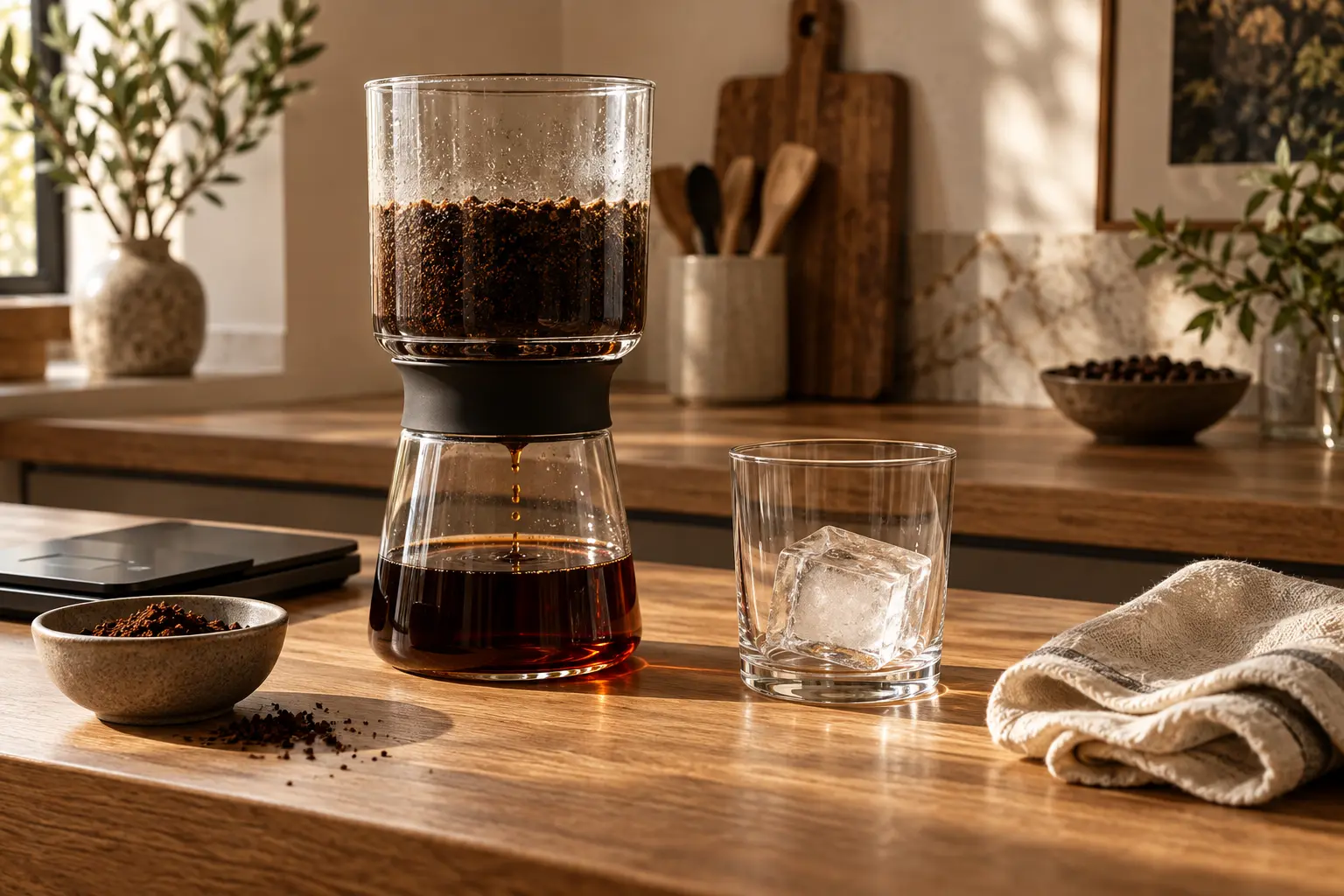
Quick picks
Three brewers for three batch sizes
The vessel matters less than a measured recipe, but a well-sized filter makes brewing and cleanup much easier. Check current capacity and seller details before ordering.
Small-batch concentrate
OXO Brew Compact Cold Brew Coffee Maker
Best for: Compact fridges, concentrate, one or two drinkers
Check on Amazon (paid link)Ready-to-drink batches
Hario Mizudashi 1L Cold Brew Pot
Best for: Fridge-door storage, lighter batches, simple cleanup
Check on Amazon (paid link)Larger concentrate batches
Toddy Cold Brew System
Best for: Households, batch concentrate, low-acid-style brewing
Check on Amazon (paid link)| Pick | Role | Best for |
|---|---|---|
| OXO Brew Compact Cold Brew Coffee Maker | Small-batch concentrate | Compact fridges, concentrate, one or two drinkers |
| Hario Mizudashi 1L Cold Brew Pot | Ready-to-drink batches | Fridge-door storage, lighter batches, simple cleanup |
| Toddy Cold Brew System | Larger concentrate batches | Households, batch concentrate, low-acid-style brewing |
Cold brew recipes become confusing because two very different drinks share the same name. One recipe makes a strong concentrate that is meant to be diluted; another makes coffee you can pour directly over ice. A ratio only helps when you know which of those you are brewing.
The numbers below use grams of coffee to grams of water. That sounds fussy, but it is simpler than comparing scoops with cups: coffee density changes with roast and grind, while a gram stays a gram. A basic kitchen scale is enough.
Build the recipe in three decisions
Decide what the jar should contain
For a ready-to-drink batch, begin around 1:12 to 1:15. That means 75 to 83 grams of coffee for one liter of water. For concentrate, begin around 1:5 to 1:8 and plan to dilute each serving with water or milk. A 1:8 batch uses 125 grams per liter.
Grind coarse, but not like gravel
Aim for a grind visibly coarser than typical filter coffee yet even enough to wet throughout. Extremely large particles can produce a thin cup; too many fines can create bitterness and muddy filtration. Add water in stages and stir gently until no dry pockets remain.
Taste before the clock decides
Twelve to eighteen hours at cool room temperature is a useful starting window; a refrigerated steep often needs longer, roughly sixteen to twenty-four hours. Begin tasting early. Filter when the coffee has rounded sweetness and enough strength, not simply when a timer reaches a famous number.
A ratio table in plain English
At 1:15, one liter of water needs about 67 grams of coffee. The result is usually light and ready to drink, especially over a modest amount of ice. At 1:12, use about 83 grams; this makes a fuller glass that tolerates ice or a splash of milk. At 1:8, use 125 grams and treat the result as concentrate. At 1:5, use 200 grams and expect a dense, expensive batch that nearly always needs dilution.
These are starting points, not laws. A pale, dense light roast may need a different grind or steep than a brittle dark roast. The shape of the brewer and how efficiently it drains also matter. Keep the ratio written down, then adjust the grind or time before making a dramatic change in coffee dose.
Why cold brew tastes hollow, harsh or muddy
A hollow batch is not always too weak. It may be under-extracted: the grind was too coarse, the steep too short or the grounds never became fully saturated. Before adding more coffee, try a slightly finer grind or a longer steep. If the aroma is pleasant but the drink simply lacks weight, then a stronger ratio is the cleaner correction.
Harsh, woody cold brew often spent too long in contact with fine particles, or began with coffee roasted darker than the drink needed. Shorten the steep, sift out obvious fines or move one step coarser. Muddy texture usually comes from forcing the slurry through the filter. Let gravity work; squeezing cloth or pressing grounds can send sediment and bitter material into the carafe.
Dilution is part of the recipe
Concentrate should be judged after dilution. Start with one part 1:8 concentrate and one part water, milk or a combination, then taste over the amount of ice you actually use. If that serving is weak, add more concentrate rather than condemning the whole batch. If it is heavy, add water in small increments and record the final proportion.
Ice is an ingredient, too. Small cubes in a warm glass melt quickly and can flatten a delicate ready-to-drink batch. Chill the coffee first or use fewer, larger cubes. For milk drinks, a concentrate can make sense because it leaves room for milk without losing the coffee character.
Filter and store it like something fresh
A metal filter is convenient but leaves more oils and fine sediment. Paper gives a cleaner, brighter cup; cloth sits between the two and needs careful rinsing and drying. A second pass through paper can rescue a gritty batch, though it will not repair over-extraction.
Transfer finished cold brew to a clean covered container and refrigerate it promptly. Brewed coffee changes with air and time even when it stays safe and cold, so make an amount you enjoy within several days rather than a heroic monthly batch. If the aroma turns dull or the flavor becomes sharply stale, make less next time.
Cold brew gear that earns its fridge space
These are starting points, not a requirement to replace gear you already own. Check the current listing, dimensions, compatibility and seller details before purchasing.
Small-batch concentrate
OXO Brew Compact Cold Brew Coffee Maker
A compact brewer designed around concentrate, with a rainmaker top and a carafe that nests beneath it. Its modest 24-ounce capacity suits people who would rather brew fresh more often than store a large pitcher.
Best for: Compact fridges, concentrate, one or two drinkers
Ready-to-drink batches
Hario Mizudashi 1L Cold Brew Pot
A simple glass pitcher with a reusable mesh basket. It is easy to understand and makes ratio experiments visible; expect a little more sediment than a paper-filtered system.
Best for: Fridge-door storage, lighter batches, simple cleanup
Larger concentrate batches
Toddy Cold Brew System
A classic immersion setup for making enough concentrate for several drinks. It takes more storage room, so it makes sense when cold brew is a daily habit rather than an occasional project.
Best for: Households, batch concentrate, low-acid-style brewing
Keep the experiment useful
Three variables worth recording
- Weigh both coffee and water so the next batch is repeatable.
- Write ratio, grind and steep time on one note instead of trusting memory.
- Taste concentrate only after using your normal dilution and ice.
Save the next batch
The mistakes that confuse ratios
- Calling every 1:8 recipe ready to drink.
- Changing dose, grind and steep time in the same batch.
- Squeezing the grounds to rush filtration.
Good questions
What people usually ask
Is 1:8 a good cold brew ratio?
Yes, as a starting point for concentrate. Try diluting one part concentrate with one part water or milk, then adjust the serving. If you want coffee that is ready to pour, begin closer to 1:12 to 1:15.
Can cold brew steep too long?
It can. A very long steep, especially with a fine grind or warm room, may taste woody, drying or muddy. Taste within the suggested window and filter when the balance is right rather than automatically choosing the longest time.
Should cold brew steep in the fridge?
Either method can work. Refrigeration is more temperature-stable and usually slower; a cool room extracts faster. Whichever you choose, keep it consistent so your notes remain useful and refrigerate the filtered coffee.
Save this list
Your next-batch note
- Choose concentrate or ready to drink
- Weigh coffee and water
- Wet every ground
- Taste before filtering
- Record the dilution
Fact-check notes
Technical details in this guide were checked against these first-party references.
Explore the idea