Quick picks
Three ways to store mugs off the wall
The best option depends on cabinet height, drawer depth and the shape of your mug handles. Measure the actual collection before ordering.
Two-level cabinet
Expandable Cabinet Shelf Riser
Best for: Daily and guest mug zones, rental kitchens
Check on Amazon (paid link)No-drill hanging
Mkono Mug Holder Rack
Best for: Light cups, compatible cabinets, reversible storage
Check on Amazon (paid link)Quiet drawer storage
7-Piece Felt Drawer Organizer Set
Best for: Deep drawers, small mugs, low storage
Check on Amazon (paid link)| Pick | Role | Best for |
|---|---|---|
| Expandable Cabinet Shelf Riser | Two-level cabinet | Daily and guest mug zones, rental kitchens |
| Mkono Mug Holder Rack | No-drill hanging | Light cups, compatible cabinets, reversible storage |
| 7-Piece Felt Drawer Organizer Set | Quiet drawer storage | Deep drawers, small mugs, low storage |
Open shelves make mugs easy to photograph, but they also put every mismatched handle, water spot and unused cup into the room. A small kitchen often feels calmer when the daily mugs stay close to the coffee station and the rest return to ordinary closed storage.
Count the mugs used in a normal week, not the collection owned over ten years. Two daily cups beside the brewer may be enough. Guest mugs can live higher, deeper or in a nearby cabinet without making the morning routine less convenient.
Make daily mugs easier to reach
Edit by frequency
Keep one mug per regular coffee drinker in the easiest position. Move sentimental, seasonal and guest cups to a second tier instead of giving every mug equal access.
Measure the handles
A mug's handle often needs more width than its body. Test the tallest and widest cup before ordering a shelf riser, under-shelf rack or drawer insert.
Protect the working zone
Store mugs close enough to reach without carrying them across a wet sink or hot kettle. Keep hooks and low shelves outside the appliance's steam and lid-clearance area.
Use the cabinet in two levels
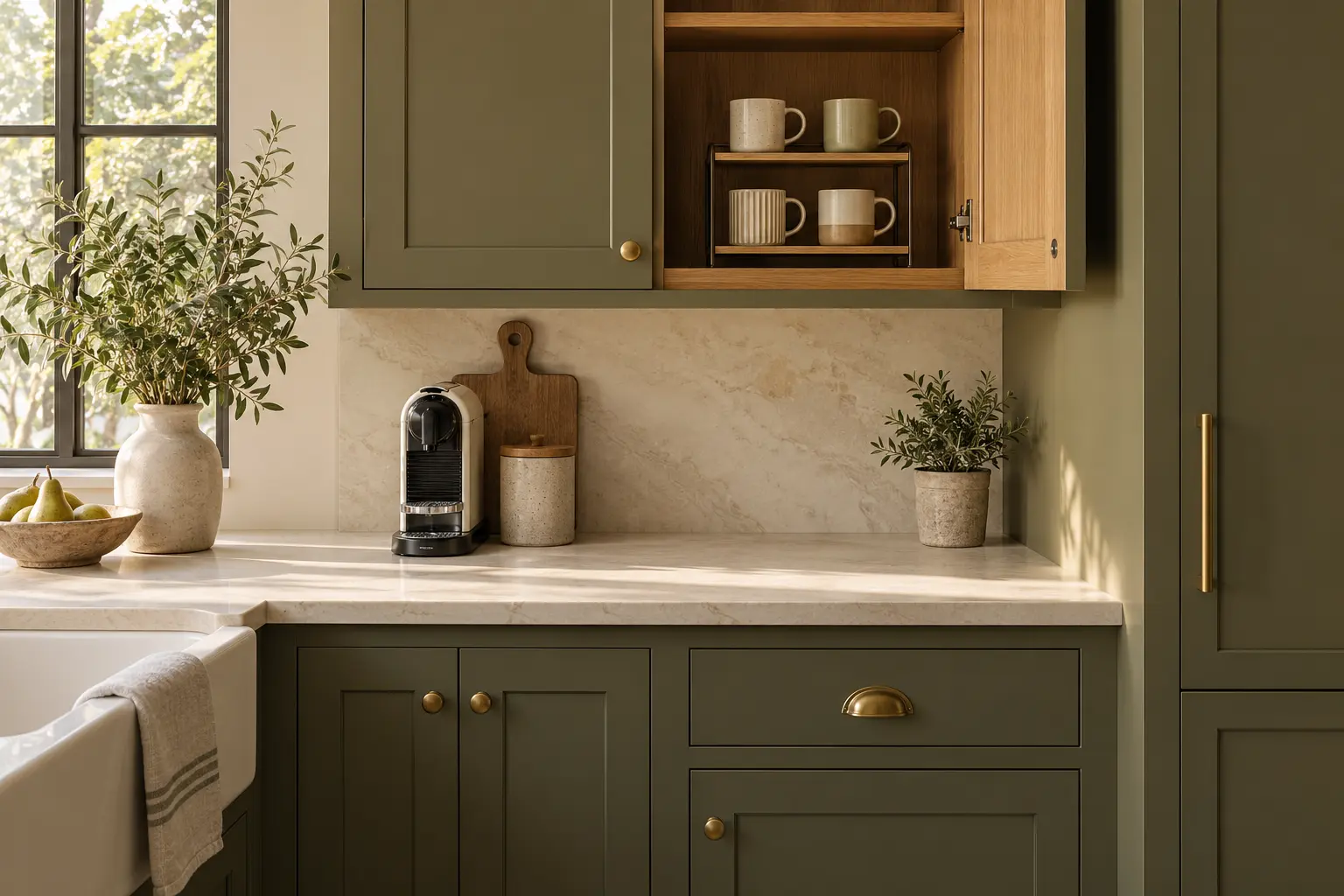
A freestanding shelf riser can turn one tall cabinet opening into two useful rows. Place short daily cups below and lighter guest cups above. Leave enough clearance to lift a mug without scraping its rim against the shelf.
Avoid unstable towers. Stacking works only when the mug maker intends it or the shapes nest without pressure on handles and rims. A cracked favorite mug saves no space.
A drawer can work—if it is deep and gentle
Deep drawers make handles visible and stop smaller people from reaching overhead, but the mugs need a non-slip base and enough room not to knock together when the drawer closes. Use adjustable dividers or felt-lined sections rather than packing cups edge to edge.
Check drawer load and hardware, especially with stoneware. Keep the heaviest mugs toward the sides or rear where the drawer manufacturer allows, and open the drawer slowly until the layout has proved stable.
Under-shelf storage is a conditional tool
A slide-on rack can use the empty space beneath a cabinet shelf without drilling, but it must match the shelf thickness and stated load. The cups should not collide with dishes below or push the cabinet door open.
Near a coffee machine, location matters more than capacity. Do not hang mugs where steam rises, where the brewer lid opens or where a glass cup can be knocked by a full water tank. Sometimes one cabinet riser is the cleaner answer.
Storage for cabinets and drawers
These are starting points, not a requirement to replace gear you already own. Check the current listing, dimensions, compatibility and seller details before purchasing.
Two-level cabinet
Expandable Cabinet Shelf Riser
A removable riser expands to use tall cabinet space without drilling. Confirm its depth, expanded width and load against the cabinet and mug collection.
Best for: Daily and guest mug zones, rental kitchens
No-drill hanging
Mkono Mug Holder Rack
A slide-on rack can hold a small number of light mugs when its shelf-thickness and load specifications match the cabinet. Keep it clear of steam.
Best for: Light cups, compatible cabinets, reversible storage
Quiet drawer storage
7-Piece Felt Drawer Organizer Set
Soft felt bins group smaller mugs and accessories in a deep drawer while reducing hard-surface contact. Measure the drawer, mug handles and closing clearance before ordering.
Best for: Deep drawers, small mugs, low storage
Quiet from the room
A mug collection that does not run the kitchen
- Group the two daily mugs by tone rather than buying a full matching set.
- Keep sentimental cups together in a secondary cabinet so the daily shelf stays easy to scan.
- Let closed storage create calm; the cabinet interior only needs to work.
Protect the cups
Small-space storage that breaks the routine
- Designing around the mug body and forgetting handle width.
- Stacking heavy cups that were not made to nest.
- Hanging mugs in the brewer's steam or lid path.
Good questions
What people usually ask
How many mugs should stay near the coffee station?
Keep the number used by regular drinkers over a normal week, plus perhaps one spare. Guest and seasonal mugs can live in a second cabinet without slowing the daily routine.
Is it safe to stack coffee mugs?
Stack only when the mug shape is designed to nest steadily without loading delicate rims or handles. Otherwise use a riser or divider so each mug has its own space.
Can mugs hang above a coffee maker?
Only if the mounting system, load and clearances are suitable and the mugs remain outside steam, heat and lid movement. When in doubt, use closed cabinet storage beside the machine.
Save this list
Your mug-storage edit
- Count one week of mug use
- Measure tallest mug and widest handle
- Choose cabinet, drawer or under-shelf storage
- Test door, lid and steam clearance
- Move guest mugs to a second tier
Explore the idea